If your browser cache, cookies or saved sign-in were cleared, enter the email address you originally registered with. We will send you a secure return link.
For your privacy, OMAAT will not restore access based on an email address alone. The secure link confirms that you control the registered email account.
We ask for just a few details so we can provide the most relevant OMAAT experience and learn how different people use the program. After you submit this form, we will email you a secure activation link. Click ACTIVATE YOUR OMAAT ACCESS in that email to begin. Once activated, you can also make the core OMAAT experience available offline.
Activation by email is required before first access. After activation, you can make the core app available offline. We do not ask for a street address, phone number, date of birth, health information, or other identification.
Please allow up to 5 minutes for delivery. If the email is not in your Inbox, check Spam or Junk and mark it “Not Spam” so future OMAAT messages reach your Inbox.
✉
Check Your Email to Activate Access
We sent a welcome and activation email to .
Open that email and click ACTIVATE YOUR OMAAT ACCESS. Your OMAAT app will open after your email is verified.
Please allow up to 5 minutes for delivery. If you do not see the email in your Inbox, check Spam or Junk and mark it “Not Spam” or add hello@onememoryatatime.org as a safe sender.
After activation, open OMAAT while connected and choose Make OMAAT Available Offline if you would like to use the core program without Wi-Fi or cellular service.
For access, we ask for your name, city or town, province or territory, email address, and the user type that best describes you. For organization-linked users, we may also ask for the name of the school, residence, church, agency, organization or media outlet. For basic beta administration and reliable updates, we also record the device category used (phone, tablet or computer), the date of your most recent successful online access, the app/content version last seen, whether the offline pack was enabled, and limited feature-use signals such as opening the Library, Share, Contact, Media, a Guided Story, Memory Box, or the French notice. Email activation is required before first access to the program. Essential program, compatibility and security updates may be required to keep OMAAT current and working properly. Optional news and promotional communications remain your choice.
What we do not ask for
We do not require your street address, phone number, date of birth, health information, or proof of residence to use this version of the program. We do not collect what you write in Memory Box or the content of your memories or conversations. Usage reporting is designed to measure app health and adoption, not the content of your storytelling.
Your memories
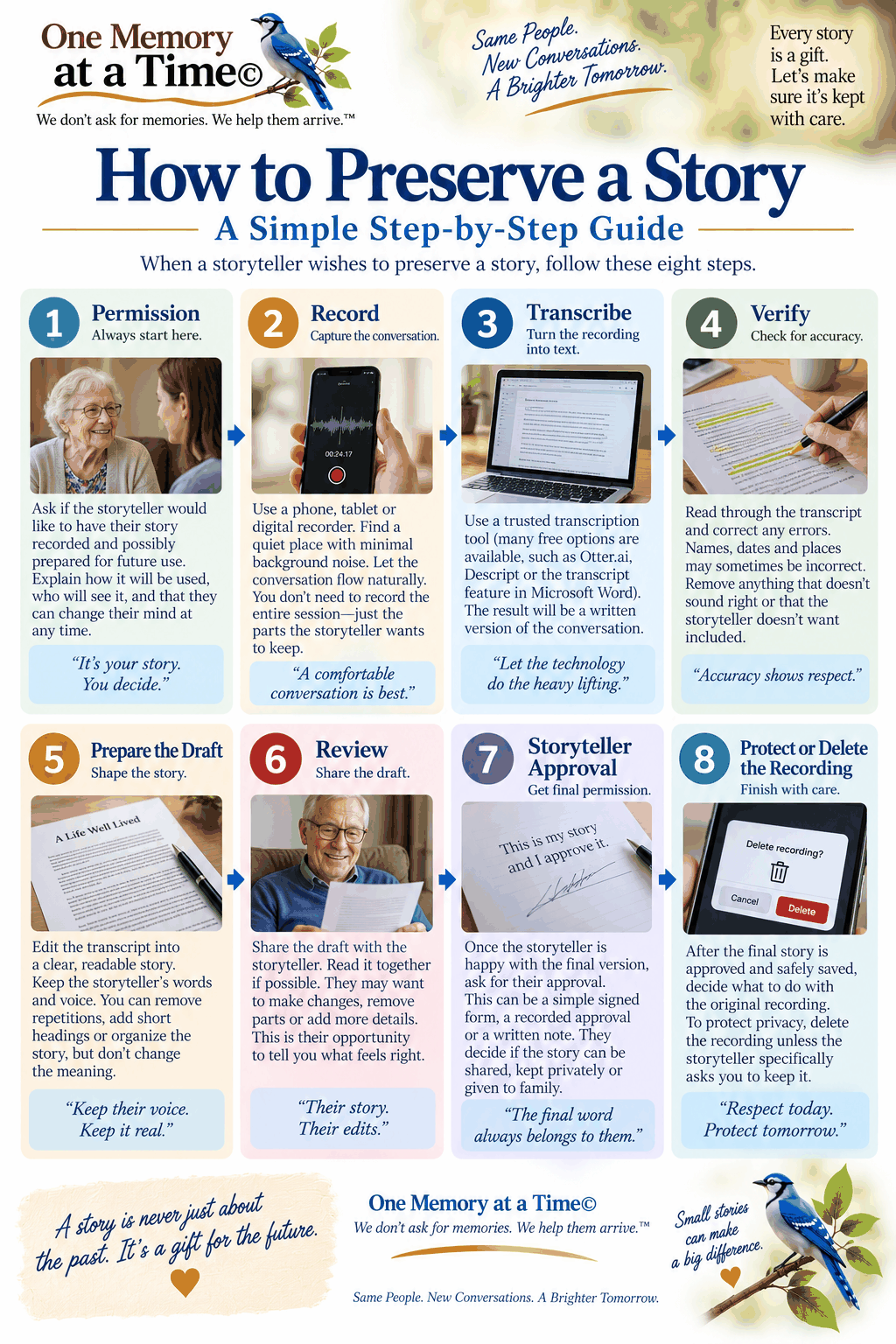
Your memories belong to you. This base version does not record, transcribe, upload, or share conversations. If you choose to use the optional “Memory Box” writing area, those notes are stored only in your browser on that device.
Phone, tablet and computer use
OMAAT treats phones differently because portability is their main purpose. Phone users are encouraged to save OMAAT for offline use after activation so the program remains available without Wi-Fi or cellular service. Tablets and computers stay connected by default so current program content and updates can arrive automatically; offline use remains available when needed.
Activation on this device
To help verified access survive mobile email/browser handoffs, OMAAT may store a signed access grant in this browser. It is used only to confirm access and does not contain Memory Box text, memories, conversations, or voice.
Choice and control
This is not a memory test. You may skip any story, prompt, or memory. There is no required order, schedule, or finish line.
Volume 1 · Our Youth
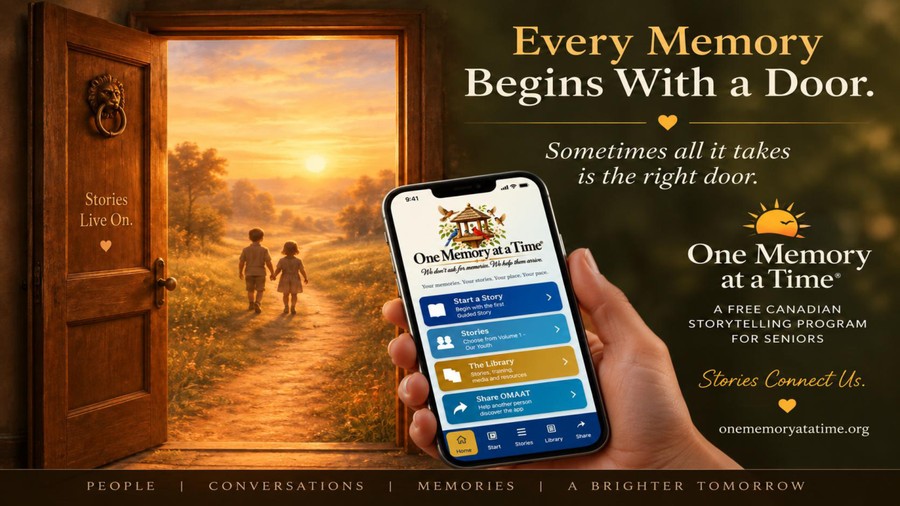
A FREE CANADIAN STORYTELLING PROGRAM FOR SENIORS
Your memories. Your stories. Your place. Your pace.
⇩
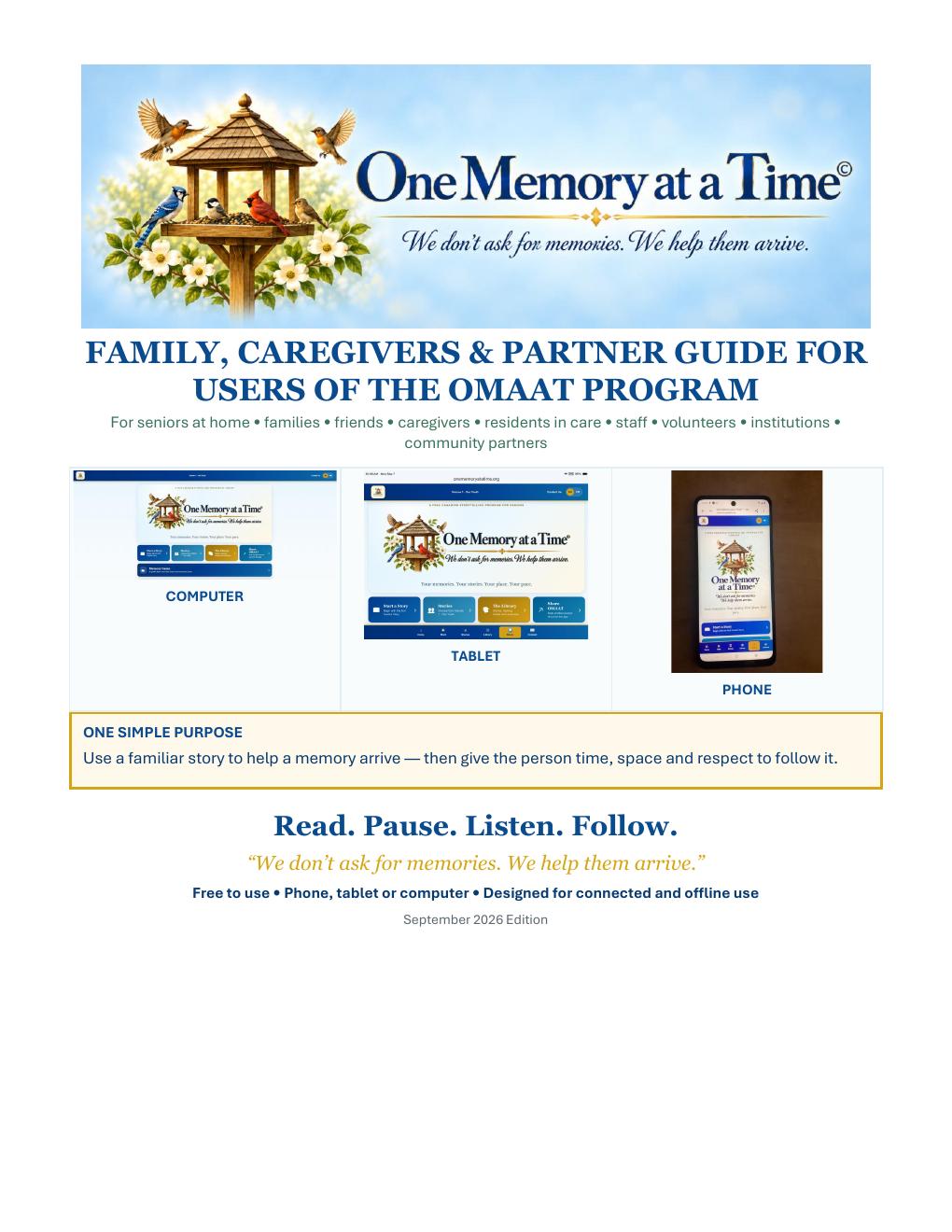
Take OMAAT with you — even without internet.
Save the core app and essential resources to this device. Ideal for home visits, schools and rural areas with weak or no connection.
Phone: portable and offline-first. Tablet: choose connected or offline use. Computer: connected use is recommended so updates arrive automatically.
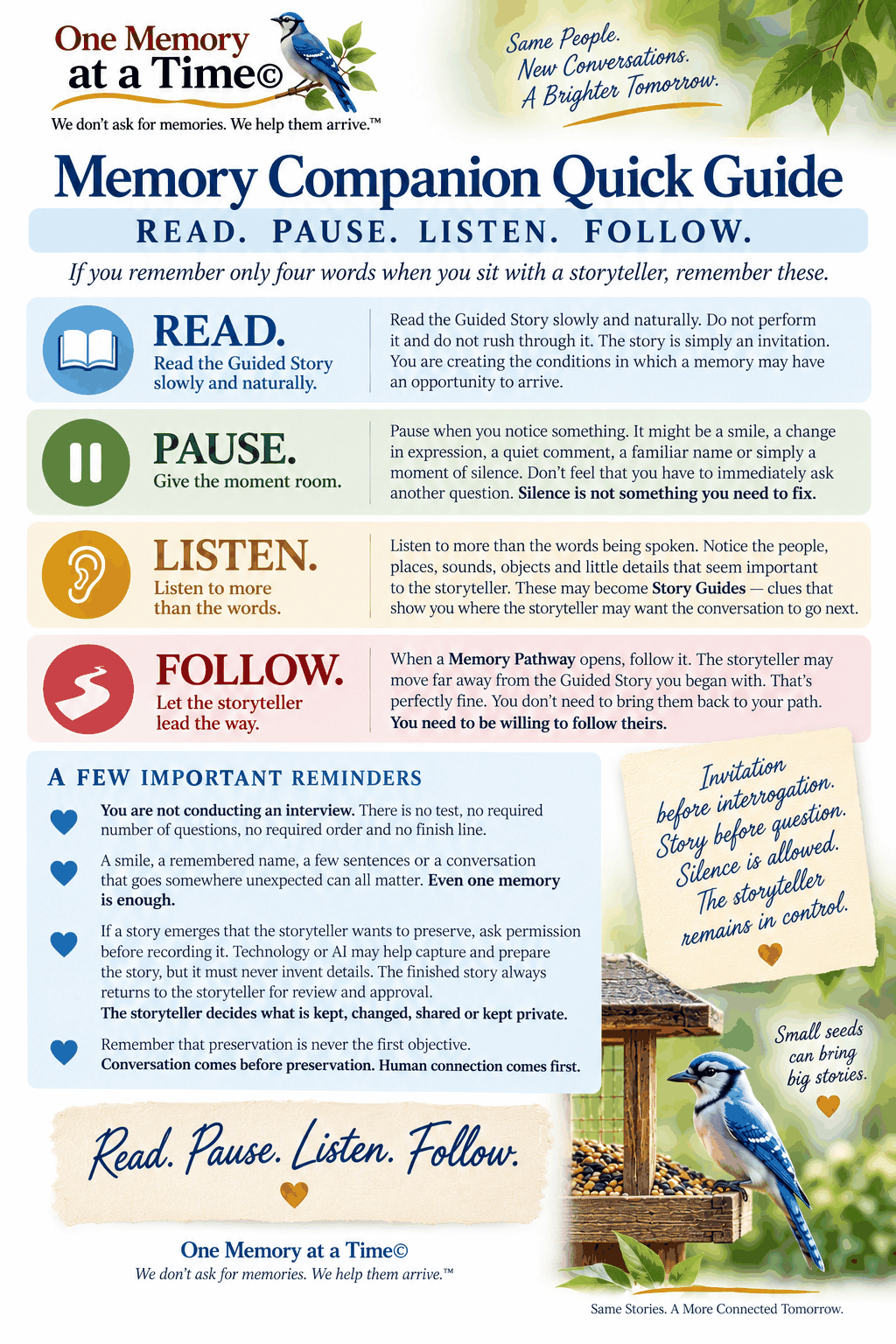
Read.Pause.Listen.Follow.
onememoryatatime.org/app
Before You Begin
There is no right way to use this.There is no schedule and no finish line. One memory is enough.
Foreword
There is something powerful about a memory.Not the dates or the details, but: A feeling. A sound. A smell. A person. A place. Or merely a moment that comes back without warning. For many seniors, those memories are still there. They don’t disappear. They simply wait—for the right way to return. One Memory at a Time was created with a simple idea from the author's memoir: We don’t ask for memories…we help them arrive.
In its earliest form, this program began as a collection of stories and prompts—designed to gently open the door to conversation. What quickly became clear was that something deeper was happening. People were not just answering questions. They were remembering. They were sharing. They were reconnecting—with themselves and with each other.
This latest version of One Memory at a Time builds on what we learned in tests with senior organizations, facilities and individuals. It introduces a more natural and flexible experience to memory recall. But at its heart, nothing has changed. This is still not a program about getting answers right. It is about Connection, Dignity, Being heard, and Being remembered. For more information, visit our website at: www.onememoryatatime.org
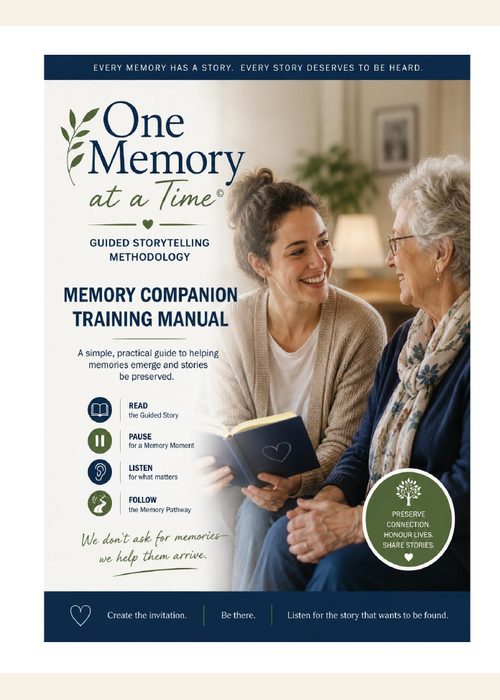
You do not need hours of training to begin. You do not need special qualifications. You do not need experience. You can become a Memory Companion in about 10 minutes. Here’s all you need to know:
1. Read the story • Slowly • Naturally
2. Pause when it feels right • If someone reacts, allow space and time
3. Listen • Give your attention • Let people finish without rushing • If no one reacts, continue • Allow silence
4. Use prompts only if needed • Ask 1–2 simple questions • Skip them if the conversation is flowing
5. Do less • Don’t over-guide • Don’t fill every moment • Don’t rush.
That’s the training! You are not leading the program; you are accompanying it.
When introducing someone new to the program, keep it simple.
✔ You:
Just read the story,
Pause when something connects, and
Listen.
That’s all you need to do.
✔ What helps new memory companions the most?
Seeing one story succeed
Knowing there is no pressure
Trying it once. Confidence comes quickly through experience.
Do less and let the story work.
✔Do not ask another question too quickly.Instead:
Wait and allow for the memory to take hold
Don’t turn it into a Q&A by asking one question after another
Don’t expect immediate responses
✔Let conversation happen naturally. Don’t try to fix emotions
• Do not try to change the subject too quickly
• Don’t try to “lead” every moment by offering solutions
Stay present, acknowledge gently.
The more natural it feels, the better it works.
A simple reminder for every session–“If you remember nothing else, remember this: Read, Pause and Listen”. You don’t need to master this. You don’t need to study it. You don’t need to prepare perfectly. You just need to start. And once you do, the experience will guide you.
That is what this workbook is all about. It wasn't created to test anyone's memory. It wasn't created to write the perfect autobiography. It wasn't created to fill pages with answers. It was created to help people enjoy conversations, rediscover memories, and preserve the stories that make every life unique.
There is no right way to use this workbook. There is no schedule to follow. There is no finish line. Some people may enjoy one story every week. Others may spend an afternoon talking about a single memory. Some may complete every page. Others may only write a handful of favourite stories. Every one of those experiences is a success. Because success isn't measured by how much you read or write. It's measured by the conversations you have and the memories you preserve. So relax. Pour a cup of coffee or tea. Find a comfortable place to sit. Open this book. And simply begin.
Read. Read the story slowly and naturally. Don't worry about reading perfectly. Just enjoy it.
Pause. If someone smiles…Pauses…Laughs…or begins remembering…Simply give them time. You don't have to fill every moment of silence. Sometimes the quietest moments become the most meaningful.
Listen. If a story begins to unfold, let it. You don't need to guide it. You don't need to hurry it. You don't need to get back to the workbook. Just listen. Sometimes the best stories aren't the ones in the book. They're the ones the book helps bring back.
That's it. - Read.Pause.Listen.
Everything else in this guide simply offers ideas to make those conversations even more enjoyable, such as memory and sensory prompts as well as the memory moments.
If you’re thinking, “I don’t have a very good memory,” you’re not alone. In fact, you’re exactly where most people begin. This workbook is not about testing memory. It is about allowing it to arrive.
There are two simple ways to experience each story:
THE STORY:Sometimes just hearing the story is enough. This is a relaxed, natural reading experience. There is no expectation to respond. You can: Read it quietly, listen as it is read, write some of your thoughts or simply let it bring back whatever it may.
THE GUIDED STORY: This version includes gentle Memory Moments within the story. There is no pressure to respond here either. You don’t need to choose which one is right. Simply follow what feels natural. These are small pauses or simple invitations to reflect. You may share something, say a few words, or simply listen.
Your memories belong to you. No one else gets to correct them.You can share as muchor as littleas you wish - A sentence is enough. A few words are enough. Even just listening is enough.You are always in control - If something doesn’t feel right, simply skip it. You decide which doors to open.Let your senses guide you - If details don’t come easily, try remembering how something felt, what you heard, what you smelled, what it was like to be there, or use a photograph.There is a section after each story with some sensory suggestions.Take your time - This is not a test. There is no finish line. We don’t ask for memories; we help them arrive!
Volume 1 · Our Youth
Choose any memory door. There is no required order.
Story 1 · Volume 1
Our Community Memories
“The Memory Doors We First Opened in Our Youth”
Milford — Where My Character Was Constructed “Woods, Walkable Schools, and Community Parents”
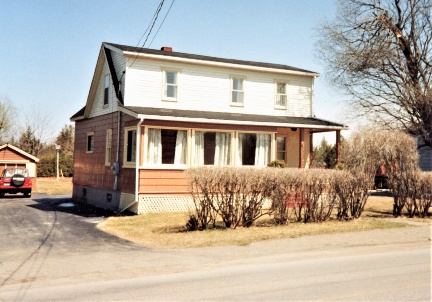
My childhood home in Milford—a suburb of Saint John, New Brunswick—did more than shelter me. It shaped me. It set the default settings of my personality: curiosity, confidence, loyalty to community, hard work, volunteering, and the slightly questionable belief that if you survived a bad idea once, you were probably invincible.
If you were a baby boomer, Milford might make you envious. Not because we had money—we didn’t—but because we had something better: a neighbourhood that functioned like a living organism. It breathed together, watched out for each other, and raised kids the way farmers raise free-range chickens. We wandered, scraped our knees, learned the hard way, and always came home to eat and rest.
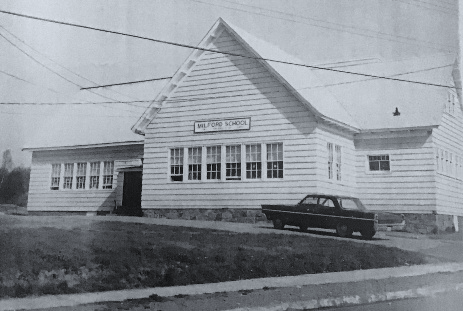
In the 1960s, our house sat four homes from Milford School. Grades One through Eight meant a short walk… or a faster run when bullies were involved. Community schools were the norm then. No buses. No long rides. No kids leaving the neighbourhood before sunrise in the winter. We lived close enough to hear the school bell ring like a neighbourhood announcement.
Today, those schools are gone. Kids are bused kilometres away. On paper, that sounds like progress. It removed the heart of the neighbourhood. You lost the sound of children walking to school, the comfort of parents knowing the whole street was watching out for them, and the everyday rhythm that made a place feel alive.
At 3:15, school emptied, and by 3:30 we were already in motion— sliding down snowbanks, skating on the pond, playing baseball or street hockey, or disappearing into the woods like explorers with no map and no fear. Compare that to today, where childhood freedom is squeezed into scheduled blocks, and daylight disappears before kids even get home.
Milford was a four-season national park disguised as a neighbourhood. Beaches, trails, rock climbing, camping, and campfires— all free. No waivers. No wristbands. No adult hovering with a warning to be careful. Just space, trust, and imagination. And the woods—the woods were everything. They weren’t just trees. They were our imagination with a roof. Our classroom for negotiation, cooperation, and the occasional argument over who got to be “king of the camp” with the highest tree climb.
My brother Mike and I bought a tent with our newspaper money when we were nine. It leaked. The zipper stuck. None of that mattered. It was ours. Some kids had family cottages, but we built our own in the woods. We had tools, scrap wood, and wilderness behind the house. We built camps constantly, using whatever materials mysteriously “circulated” through Milford. If boards or nails disappeared, they weren’t stolen—they were donated to KIP, the Kid Infrastructure Program. We were recycling before it was fashionable.
Behind our house lay the woods of Black Charlie—a scary local legend from the 1930s I never met. I’m sure parents invented him to keep us out of the woods at night. That was parenting in the 1950s. No apps. No tracking. Just one mysterious character who “might be out there.” We didn’t understand danger the way adults do. I once balanced across ice floes in rubber boots. Unable to swim, one slip away from freezing water and drowning. Another time, we found a rowboat and decided rowing toward Indiantown—with the Reversing Falls nearby—was a fine idea.
No life jackets. No understanding of tides. Looking back, that was a “what were you thinking?” moment. The answer: we weren’t. We were kids.
I must have had guardian angels—probably a whole rotating crew. But Milford wasn’t just an adventure. It was a community. Real community. Most homes had one income and one parent at home. Small stores knew your name. At eight, I worked at Russell’s store across the street, running deliveries and sometimes minding the counter. She trusted kids with responsibility, and that trust built confidence you couldn’t buy.
We lived simply: a fuzzy black-and-white TV, a party-line phone, a radio with a dial so sensitive it felt like cracking a safe. Patience was built into the technology.
The community raised you. If you got in trouble, the whole street knew. If you needed help, many doors were open and welcoming. And when Mom wanted you home, she didn’t text—she yelled your name, and it travelled like a jungle intercom. Wireless social media, 1950s edition.
That’s what Milford gave me. Not just memories, but a blueprint. You don’t build strong people in isolation. You build them in community—one day, one season, one neighbour at a time.
Read. Pause. Listen.If a memory begins to arrive, let the conversation go there.
Where It All Began - The Home That Shaped Me
My childhood home in Milford—a suburb of Saint John, New Brunswick—did more than shelter me. It shaped me. It set the default settings of my personality: curiosity, confidence, loyalty to community, hard work, volunteering, and the slightly questionable belief that if you survived a bad idea once, you were probably invincible.
A Neighbourhood That Raised Us - Not Wealthy… But Rich in Something Better
If you were a baby boomer, Milford might make you envious. Not because we had money—we didn’t—but because we had something better: a neighbourhood that functioned like a living organism. It breathed together, watched out for each other, and raised kids collectively. We wandered, scraped our knees, learned the hard way, and always came home. Memory Moment - “What kind of neighbourhood did you grow up in?” PAUSE OPTION
Walking to School - When Community Was Close
Our house sat just four homes from Milford School. No buses. No long rides. Just a short walk… or a faster run when bullies were involved. You could hear the school bell from home. Today, that’s gone. PAUSE OPTION
When School Let Out - Freedom Began at 3:15.
At 3:15, school emptied—and by 3:30 we were already outside. Sliding on snowbanks. Skating on ponds. Playing hockey. Or disappearing into the woods like explorers. No schedules. No supervision. Just imagination. PAUSE OPTION
The Woods - Where Childhood Really Happened
The woods weren’t just trees. They were our playground, our classroom, our meeting place, our imagination with a roof. We built camps. Made rules. Argued. Led. Followed. Memory Moment - “Was there a place you loved to play as a child?”
PAUSE OPTION
Building Our Own World - Nothing Fancy… But It Was Ours
My brother Mike and I bought a tent with our newspaper money. It leaked. The zipper stuck. Didn’t matter. We also built camps in the woods behind the house using whatever nails and wood we could find. If wood or nails “disappeared” … they weren’t stolen. They were… redistributed. PAUSE OPTION
Risk, Adventure… and Not Knowing Better - We Were Kids
We didn’t understand danger the way adults do. Balancing on ice floes. Rowing near dangerous waters. No life jackets. No fear. Looking back… Is it a miracle, the time we lived in? Or just another day. Memory Moment - “Did you ever do something as a child that might worry people today?” PAUSE OPTION
A Real Community - Everyone Knew You
This wasn’t just a place. It was a community of one-income households, stores that knew your name and family, adults who watched all the kids, and responsibility started young. At eight, I worked in a local store. That trust built confidence.
PAUSE OPTION
Simple Living - Life Was Slower… and That Was the Point
We had a black-and-white TV, Party-line phones, and radios with dials that had a bank safe-like tuner. Everything required patience. And somehow… that built something in us. PAUSE OPTION
The Whole Street Raised You - You Were Never Alone
If you got in trouble… everyone knew. If you needed help… doors opened.
And when Mom called your name…The whole neighbourhood heard it and participated in the quest to find you. Memory Moment - “Who would call you home when it was time to come in?” PAUSE OPTION
What It All Meant - A Blueprint for Life
Milford didn’t just give me memories. It gave me a blueprint. You don’t build strong people in isolation. You build them in community. One day. One neighbour. One memory at a time.
YOUR TURN: The following questions will help you explore your childhood and the community environment that shaped your early view of the world. Below are six gentle, memory-unlocking questions, written specifically for seniors, and clearly inspired by the themes, tone, and moments in my Milford story. They are designed to feel inviting, not demanding.
Core Memory Prompts
You do not need to use all prompts. In most sessions, 2–4 prompts are more than enough. If time is limited, or to begin a discussion, start with these:
What was the name of the place or neighbourhood where you grew up, and what did it feel like to come home there at the end of the day?
How far was your school from home? How did you usually get there?
Where did kids go to play when there were no organized activities or adults watching?
Who were the adults in your neighbourhood who watched over everyone’s kids—not just their own?
What was the first responsibility you remember being trusted with as a child?
Who were your closest childhood friends, and where did you usually gather?
STORY ONE — SENSORY SECTION
Sometimes memories arrive because of something familiar.Community & Early Life
🎵 MUSIC – Search YouTube
“Rock Around the Clock” –
“Que Sera, Sera” –
“The Happy Wanderer” –
These songs reflect everyday life and the feeling of youth and movement
🔊 SOUNDS
School bell ringing (YouTube: “old school bell sound”)
Children playing outside (YouTube: “kids playing street 1950s sound”)
Just begin with a photo from your past, pass it around, and let it do the talking.
YOUR MEMORY BOX
Memory Box
A few words are enough. Like the recipe boxes that held family favourites, this is a simple place to keep a thought for later. Your Memory Box stays only in this browser on this device and is not sent anywhere.
Story 2 · Volume 1
Family & Belonging
“Family is Where Identity Begins”
The Influencers in My DNA “The People Who Shaped Me Before I Knew I Was Being Shaped”
Sometimes the life lessons that shape our future come from people who never meant to teach us at all. We inherit more than looks and laughter. We inherit drive, curiosity, and the courage to want more. As children, we often imagine futures that mirror the lives around us. If your father wore a hard hat, you pictured yourself in one too. If your mother ran an efficient home, you assumed that was simply how life worked: you showed up, did your part, and didn’t complain much about it.
That’s what made my own path curious. Where did my desire to be a door-to-door salesman come from? No one in my family or my parents' family (31) siblings held the title “salesperson.” Yet I became one at fifteen and remained one for life—selling products, ideas, fundraising projects, and eventually the belief that a good life is built by knocking on one more door than your fear wants you to. If I weren’t trained in sales by the job title, I was trained by something deeper.
When I look back, I don’t see a family tree. I see a family engine of risk-takers, caretakers, builders, and quiet doers. People who carried entire households through hard times without ever announcing, “Look at me. I’m being a hero.”
That kind of strength doesn’t disappear when someone dies. It leaks forward. It becomes the tone of your life. And before you know it, you’re walking into adulthood with a blend of courage and curiosity you can’t fully explain. That’s what happened to me.
My Paternal Grandfather
My paternal grandfather, Louis Hebert, was born in Cherbourg, France, in 1863 and died twenty-one years before I was born. Yet he influenced my life as if he were sitting at the kitchen table. Some people leave money. Some leave stories. Louis left a legend. At eleven, he shipped out as a mess boy on a French sailing vessel. Today, we barely let an eleven-year-old cross the street alone. Louis crossed oceans. He spoke three languages, deserted ships, survived rough seas and hard luck, and lived the kind of life that usually exists only in sailor tales. In 1886, he immigrated to New Brunswick. His final Atlantic crossing was aboard the Tikoma, earning him the nickname “Louis Tikoma.” That ship’s figurehead now rests in the New Brunswick Museum—a reminder that some lives leave physical traces behind.
After losing his first wife and child in childbirth, Louis was left with eight children and unbearable grief. He didn’t collapse. He moved forward. He married again, had 17 more children, and helped raise twenty-five children in total. That kind of life requires stamina, grit, and an unspoken belief that the work is worth it.
My Maternal Grandmother
If Louis gave me the DNA of boldness, my maternal grandmother, Mary Millinder, Gram, gave me the DNA of steadiness. Born in England in 1891, her childhood included abandonment, an orphanage, and eventually being sent to Canada as a British Home Child. She arrived in Saint John as a 12-year-old girl, indentured to a military family in exchange for room and board. What strikes me most isn’t just that she survived, but that she didn’t turn bitter. Her faith stayed intact. Her kindness stayed intact. I remember the stray cats at her back door—always hungry, always hers. She fed them as if she were feeding the world. In a way, she was. Gram taught me compassion without advertising it.
My Parents
My childhood, surrounded by my parents and the Milford community, was loud, loving, and full of lessons I didn’t recognize at the time. Dad was a carpenter for nearly forty years—dependable, loyal, and quietly generous. He helped neighbours and the church alike without fanfare. Mom ran meals for a small army and made warmth feel normal.
Dad volunteered constantly, selling church fundraiser tickets one conversation at a time. From him, I learned that community isn’t something you admire—it’s something you participate in. When he died in December 1990, the rain poured on the day of his burial on the 23rd. That Christmas remains one of the most tender of my life. Grief has a way of making love louder. Even near the end, Dad gave us humour—a reminder that dignity is sometimes overrated, and laughter is how families survive.
My Brother Doug and Some Important Uncles
Doug, fifteen years older than me, taught me how to ride a bike—and how to fall. “You’ll tip,” he said. “What matters is how you get up.” I still hear that voice most days and take kindly to that generous message of preparedness that rang loudly throughout my life.
My Uncle Ed showed me that door-to-door selling was about presence, not products. Uncle Tom showed loyalty to my country beyond the call of duty by being deaf in one ear during WWI. Uncle Frank demonstrated the quiet endurance for his country in WWI. His army boot brush with his initials knifed in still sits in my office—a small object that outlasted war and a century.
In Review
When I gather these stories together, I see the truth. A career in sales wasn’t the inheritance. Perspective was. I wasn’t self-made. I was family-made, community-made and DNA-made. If I’ve had any success in life, it’s because I was shaped by people who carried more weight than they complained about—and kept moving forward anyway. That is what I inherited. And that is what I hope my stories pass on.
Read. Pause. Listen.If a memory begins to arrive, let the conversation go there.
Where We Really Come From - More Than Just a Family Tree
Sometimes the life lessons that shape your future come from people who never meant to teach you at all. We inherit more than looks and laughter. We inherit drive, curiosity, and courage. As children, we often imagine futures that mirror the lives around us.
Becoming Someone No One Else Was - Where Did That Come From?
No one in my family was a salesperson. Yet at fifteen, I became one. And stayed one for life. Looking back, I realized something important: I wasn’t trained for a job. I was shaped by people. Memory Moment - “Did you ever become something no one else in your family was?” PAUSE OPTION
The Family Engine - Quiet Strength That Carries Forward
When I look back, I don’t see a family tree. I see a family engine of Risk-takers, Caretakers, Builders, and Quiet doers. People who carried heavy loads in their lives… without ever announcing it. That kind of strength doesn’t disappear. It moves forward… into you. PAUSE OPTION
My Grandfather - The DNA of Boldness
My grandfather, Louis Hebert, lived a life that felt larger than life. At eleven years old, he went to sea. He crossed oceans and spoke multiple languages. He faced hardship that most of us can’t imagine. He didn’t leave money behind. He left a story. And somehow… that story shaped me. Memory Moment - “Do you remember stories about your grandparents or earlier generations?” PAUSE OPTION
Strength Through Loss - What Endurance Really Looks Like
After losing his wife and child, he was left with seven children. He kept going. He rebuilt, and he raised a large family of 25. That kind of life requires something deep: strength without complaint and purpose without recognition. PAUSE OPTION
My Grandmother - The DNA of Kindness
If my grandfather gave me boldness…My grandmother gave me steadiness. Her early life was hard: Orphaned, sent to Canada, and she worked for survival. And yet…she never became bitter. She stayed kind. I remember her feeding stray cats. It was like she was feeding the world. Her world of making a difference. Memory Moment - “Was there someone in your life who showed kindness in quiet ways?”
PAUSE OPTION
What She Taught Me - Kindness Without Announcement
She didn’t give speeches. She didn’t teach lessons out loud. She simply lived them. And somehow that quiet example stayed with me. PAUSE OPTION
My Parents - Love That Felt Normal
My childhood was loud, loving, and full of lessons I didn’t recognize at the time. My father was a carpenter, dependable and quietly generous. My mother ran the home, created warmth and made everything feel steady. They didn’t have to explain a life of good values; they lived them. Memory Moment - “What are the strongest qualities you remember about your parents or caregivers?” PAUSE OPTION
Community in Action - Not Something You Admire, Something You Do
My father volunteered constantly. From him, I learned that community isn’t something you admire; it’s something you participate in. That lesson stayed with me for life.
Loss and Love - When Life Becomes Real
When my father passed away, it changed everything. That first Christmas without him became one of the most emotional of my life. Because grief does something powerful: it makes love louder. PAUSE OPTION
My Brother Doug - Learning How to Fall—and Get Up
My brother taught me how to ride a bike and, more importantly, how to fall. “You’ll tip,” he said. “What matters is how you get up.” I still carry that voice as a life lesson today. I don’t think he realized its power. Memory Moment - “Did someone teach you an important life lesson in a simple way?” PAUSE OPTION
The Uncles - Lessons Without Titles
My uncles each taught something different – Presence, Loyalty and Endurance. Not through lectures but through how they lived. Small moments in World War 1 had a lasting impact. PAUSE OPTION
What It All Means - You Are Not Self-Made
When I gather these stories together, I see the truth: I wasn’t self-made I was family-made, I was community-made. Everything I became started long before I understood it.
YOUR TURN: The following questions will help you explore your family DNA that shaped your early view of the world. Below are six gentle, memory-unlocking questions, written specifically for seniors, and clearly inspired by the themes, tone, and moments in my DNA story. They are designed to feel inviting, not demanding. You can use all of them for your story or select a few.
Core Memory Prompts
You do not need to use all prompts. In most sessions, 2–4 prompts are more than enough. If time is limited, or to begin a discussion, start with these:
Who were the people in your family that you felt closest to when you were growing up?
What are the strongest qualities you remember about your parents or caregivers?
Do you remember any stories about your grandparents or earlier generations?
Was there someone in your life who showed kindness in quiet ways?
Did someone teach you an important life lesson in a simple way?
Who helped shape the person you became?
STORY TWO — FAMILY & BELONGING
Sometimes memories arrive because of something familiar.
Sensory Moment (Optional)
🎵 MUSIC – Link to YouTube
You Are My Sunshine-
Happy Summer Days -
Unchained Melody -
🔊 SOUNDS
Family dinner table chatter
Kitchen sounds (dishes, cooking)
Radio playing in the background
👃 SMELLS
Home cooking
Fresh bread
Soap/laundry
Sunday dinner
🖼️ VISUALS
Just begin with a photo from your past, pass it around, and let it do the talking.
YOUR MEMORY BOX
Memory Box
A few words are enough. Like the recipe boxes that held family favourites, this is a simple place to keep a thought for later. Your Memory Box stays only in this browser on this device and is not sent anywhere.
Story 3 · Volume 1
Elementary School Years
“Small Desks to Fit Big Lessons”
School Days and Straps “Grades One to Six — The Runway to Life”
This part of my memoir is a walk back through the school doors I opened from Grade One in 1960 to Grade Six. It’s not a list of report cards or a nostalgia tour of chalk dust and spelling bees. It’s more of a behind-the-scenes look at how school—good days, bad days, bullies, straps, teachers, classmates, and everything in between—helped shape who I later became.
Because here’s the truth: school didn’t just teach me subjects. It taught me consequences. It taught me that paying attention early matters, and that ignoring the basics in Grades One to Six can leave a person limping through life. It taught discipline—sometimes the gentle kind, and sometimes the kind delivered with a leather strap across your hands.
Today, people debate the “right” way to educate children. Back then, there wasn’t much debate. Once you walked through the school door, your parents handed the baton of authority to the teacher. That baton came with high expectations and a clear message: you were there to learn, and the teacher intended to make sure.
No Kindergarten, No Babysitting, No Boredom
There was no kindergarten at my school in the 1950s and 60s. You started school when you started school. Until then, you learned at home and in the neighbourhood—how to share, how to fight (mostly unfairly), how to run very fast, how to eat slowly, how to listen to adults, and how not to get caught doing something you knew you shouldn’t be doing.
That “extra pre-year” in kindergarten didn’t set us back. In many ways, it did the opposite. It gave us time to know our families, our neighbours, and the ecosystem of our community. Most homes had a stay-at-home parent, so school wasn’t needed as babysitting.
Television wasn’t a babysitter either. Programming didn’t even begin until late morning, and there were only two channels. TV was a reward. If you’d been outside all day, you felt you’d earned it.
I honestly don’t remember being bored. In summer, we were out by 8:00 a.m. and came home mainly to eat and sleep. The world wasn’t something you watched on TV—it was something you joined.
Even kids’ shows carried lessons. The Friendly Giant and Mr. Dressup taught kindness and imagination. Bugs Bunny taught persistence. Wile E. Coyote was the first motivational speaker I ever saw, even though an anvil dropped on his head so many times, and he fell off a cliff while trying to reach his goal in life. Pepé Le Pew taught romance with enthusiasm and zero self-awareness, which I do not recommend as a love strategy. Foghorn Leghorn taught one thing perfectly: just listen to others.
When You Entered School, the Teacher Took Over
When you entered Grade One, your teacher became a second parent—with authority to back it up. Corporal punishment was legal, accepted, and often supported at home. Teachers didn’t ask permission to correct behaviour. They corrected it sometimes immediately and publicly. And yes, for kids like me, it worked.
I also don’t remember disruptive students with special needs the way we see them today. They existed, but the system handled them differently. There was a separate school where children received specialized support. Later, integration replaced that model. The intentions were good, but the reality often meant one child could disrupt learning for many while still not getting the help they needed immediately. At times, good intentions don’t always produce good outcomes.
Pass or Fail — No Soft Landings
Failing wasn’t a conversation; it was a consequence. If you didn’t meet the grade average, you repeated the year—even if you passed some subjects. Some kids worked harder. Others grew older, frustrated, and angry. By Grade Six, some classmates were fourteen or fifteen and left school as soon as they could.
There was no talk of learning disabilities—only learning deficiencies. If you struggled, the assumption was that you weren’t trying or weren’t smart enough. That’s a harsh label to stick on a child.
My Other Education
While school taught reading and discipline, the community taught me how to belong. I was an altar boy, a newspaper boy, a delivery courier, a volunteer at a rink and youth center, a Cub Scout, and a Boy Scout. Scouting’s slogan—Be Prepared—sounded simple. Later, I realized it was a life strategy. Preparedness builds confidence. It’s what makes someone knock on a door again after rejection. It’s what helps you improvise when life throws curveballs—and it always does.
Milford School was close enough that I could leave home at 8:55 and still make the 9:00 bell—unless bullies were involved, in which case I could move even faster.
Teachers Who Left Their Mark
Mrs. Pickford, my Grade One teacher, was firm and carried a strap. I earned it twice. Once for jumping into a puddle and soaking another student. Funny to me. Not funny to anyone else. The message was simple: choices have consequences.
Grade Two belonged to Ms. Ward—kind, gentle, and safe. Nothing dramatic happened, which is probably the highest compliment a teacher can receive.
Grade Three brought Mrs. Gibson—four feet something of pure discipline—and the last time I ever saw the strap. It also brought film strips, science experiments, and my first sense that the world was bigger than Milford.
Grades Four and Five brought structure, geography, and the seed of curiosity about the wider world.
Grade Six was chaos under a too-gentle, first-year teacher. It taught me something important: structure matters. Discipline matters. Not to crush kids—but to give them stability. It also gave me my first swear word. One push, one moment, and suddenly I realized that growing up includes discovering you’re capable of becoming someone you didn’t expect to be.
Elementary school didn’t make me a salesman, but it built the runway. It taught me to show up, handle pressure, and live with consequences. Some kids never found their footing. Some acted out because they were ashamed. That’s why Grades One to Six matter. They aren’t “just the basics”, they’re the runway to your life's future. And later, when I knocked on doors and handled rejection, I wasn’t starting from zero. I was starting from Milford School, where I learned, sometimes painfully, that the bell rings whether you’re ready or not, and you'd better show up.
Read. Pause. Listen.If a memory begins to arrive, let the conversation go there.
Walking Back Through Those Doors - More Than Just School
This part of my life is not about report cards or spelling tests. It’s about how school— the good days, the hard days, the teachers, the classmates— quietly shaped who I became.
What School Really Taught Me - Lessons Beyond Books
School didn’t just teach subjects. It taught consequences, discipline and responsibility. Sometimes gently…and sometimes not so gently. Did you get the strap? Memory Moment - “What do you remember learning in school beyond reading and writing?” PAUSE OPTION
Authority Meant Something - When Teachers Took the Lead
Back then, when you walked into school, your parents handed authority to the teacher. There was no debate. You were there to learn, and the teacher made sure you did. Memory Moment - “What were your teachers like when you were young?”
PAUSE OPTION
Before School Even Started - Learning Happened at Home
There was no kindergarten. You learned at home and in the neighbourhood about how to share, how to listen, how to behave and sometimes how not to get caught. Childhood prepared you for school. PAUSE OPTION
A Different Kind of Childhood - No Babysitters. No Screens.
Television wasn’t always on. It wasn’t a babysitter. It was a reward.
We weren’t watching life on a 20-inch box; we were living it. PAUSE OPTION
Never Bored - The Days Felt Full
I don’t remember being bored. We were outside by early morning and came home mainly to eat and sleep, or it was too dark to see anything. The world wasn’t something you watched. It was something you joined.
Lessons Came in All Forms - Even From Cartoons
Even the shows we watched taught something: kindness, imagination and persistence. Some lessons were serious. Some not so much. Oh, that Willie E Coyote certainly lived a lot of lives. Memory Moment - “Were there shows, games, or activities you remember learning from?” PAUSE OPTION
Discipline Was Real - And Immediate
Teachers corrected unwanted behaviour right away. Sometimes publicly. Sometimes strictly. And for many of us, it worked.
Memory Moment - “Do you remember how discipline worked in your school?”
PAUSE OPTION (watch for emotional reactions here)
Not Every Child Fits the System - A Different Time
Some children struggled. Back then, support looked very different than today. Looking back, we can see that good intentions don’t always lead to good outcomes.
PAUSE OPTION (sensitive reflection point)
Pass or Repeat - No Soft Landings
If you didn’t meet expectations, you repeated the year, simple as that.
Some grew stronger, and some struggled more. PAUSE OPTION
Learning Outside the Classroom - Where Life Was Really Taught
School taught academics. But the community taught life. I was an altar boy, a paperboy, a volunteer, and a scout. That’s where confidence was built. Memory Moment - “What did you learn outside of school that stayed with you?”
PAUSE OPTION
Teachers Who Stayed With Me - Different Styles, Same Impact
Some teachers were strict. Some were kind. Some were unforgettable. Each one left something behind. Even the difficult ones. PAUSE OPTION
Structure Matters - The Lesson That Lasted
One year without structure taught me something important. Discipline doesn’t limit you; it stabilizes you. That lesson stayed with me.
The Runway to Life - Where It All Began
Elementary school didn’t define my life, but it built the runway. It prepared me for life’s pressure, responsibility and showing up. Because in life, the bell rings whether you’re ready or not.
YOUR TURN: The following questions will help you explore your childhood and the community environment that shaped your early view of the world. Below are 6 gentle, memory-unlocking questions, written specifically for seniors, and clearly inspired by the themes, tone, and moments in my elementary school story. They are designed to feel inviting, not demanding. You can use all of them for your story or select a few.
Core Memory Prompts
Facilitator Note: You do not need to use all prompts. In most sessions, 2–4 prompts are more than enough. If time is limited, or to begin a discussion, start with these:
Do you remember your first school or classroom—what did it look or feel like?
How did you get to school each day?
Was there a teacher you remember clearly? What made them stand out?
What did you do during recess or lunchtime?
Was there a subject you liked—or didn’t like?
Who were your school friends, and what do you remember doing together?
STORY THREE — SCHOOL YEARS
Sometimes memories arrive because of something familiar.
Sensory Moment (Optional)
🎵 MUSIC– Link to YouTube
School Days -
Yakety Yak -
Be True to Your School -
🔊 SOUNDS
School bell
Chalk on the blackboard
Playground noise
👃 SMELLS
Chalk dust
Books/paper
Lunchboxes
🖼️ VISUALS
Just begin with a photo from your past, pass it around, and let it do the talking.
YOUR MEMORY BOX
Memory Box
A few words are enough. Like the recipe boxes that held family favourites, this is a simple place to keep a thought for later. Your Memory Box stays only in this browser on this device and is not sent anywhere.
Story 4 · Volume 1
Faith and Belonging
“Before I Understood Faith, I Felt It”
My Years as an Altar Boy “Service Taught Me Discipline, Sorrow Taught Me Empathy, and Faith Taught Me Strength.”
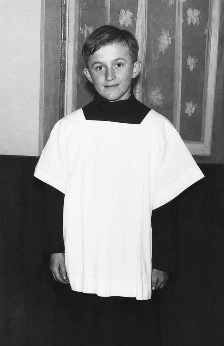
Most seven-year-olds would have been terrified to stand at the front of a church with hundreds of eyes on them. But for me, serving as an altar boy at St. Rose Catholic Church in Milford became my introduction to volunteerism. It didn’t pay, except for the occasional tip at a wedding, but it gave me something far more valuable: lessons in discipline, dependability, and service.
I began in early 1961, when the liturgy was still in Latin and ended in 1965 when the priest faced the people. I didn’t understand the words, but, like a parrot, I could repeat them. What mattered more were the actions, the rituals, the precision, the expectation to do things right. None of my brothers or friends joined; I suppose I just wanted to serve.
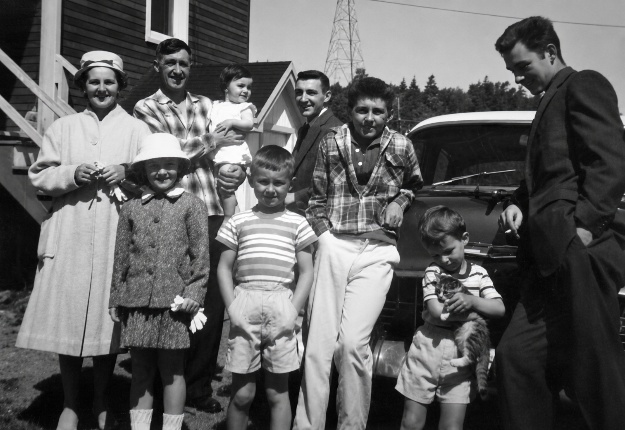
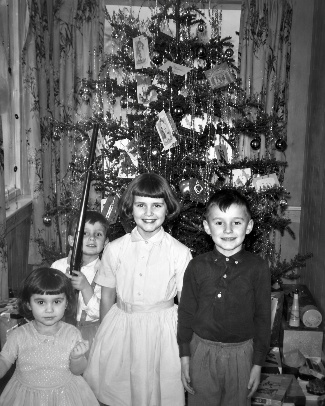
My parents ensured we never missed Mass. On stormy mornings, Dad would call out, “Coats on, everyone, we’re still going!” As we piled into the car, Mom would add with a half-smile, “If we don’t make it, at least we’re headed in the right direction.” To them, attendance wasn’t optional; it was faith in action. Photos, as they say, speak 1000 words. This is my family in this 1960 photo, gathering for church on a Sunday morning. To everyone's surprise, my brother Mike did not bring our cat.
The Demands of Service
By age seven, I was juggling church duties with school, chores, and my newspaper route. Some weeks, it amounted to a 30-hour workload plus school. We had to keep cassocks pressed, arrive early to prepare the altar, and be ready for weekday services, weddings, and funerals. Weddings were the bright spots. Once, in 1963, I earned $10 for a ceremony and even joined the priest at the reception. When the bride pressed the bill into my hand, whispering, “Thank you, young man, you did wonderfully,” I felt ten feet tall.
Funerals, however, were different. Standing before grieving families taught me early lessons in sorrow and empathy. Two or three a month was not unusual, and often they were families I knew. After one particularly heavy service, another altar boy leaned over and whispered, “I don’t know how you keep from crying.” I whispered back, “Sometimes I don’t.”
I’ll never forget Father Osborne, our priest. He was kind and respectful and never gave us any reason to fear. He even had the first colour TV in the community in 1963, inviting altar boys to watch Bonanza or Disney on Sunday nights. We’d gather around the screen, wide-eyed and in awe, to view our favourite shows in colour.
Lessons from Loss
The funerals left deep marks. These are three that made the most impression.
Charles Ferris (1963): a father of six, gone at age 44 after a failed surgery. His son, Mike, would later become my high school classmate and, much later, a key employee at my company.
Norm Doyle (1965): only 14, drowned after diving into the St. John River and striking a submerged log. His death darkened our summer. Our parents clutched us tighter.
Jim Palmer (1968): my father’s golfing friend, who collapsed on the first hole. Seeing his open casket at his home, in the same room where I watched TV with his son Blake, haunted me. I couldn’t go back to their house or TV room again.
These experiences brought me face-to-face with mortality before I was a teenager. They also stripped away stage fright. Once you can stand before a grieving crowd, you learn quickly that an audience of strangers is nothing to fear.
In Review:
Becoming an altar boy at age 7 taught me responsibility, courage, and the value of serving others. Weddings gave me joy, funerals gave me compassion, and long hours gave me discipline. It wasn’t about the money—or the lack of it—but about learning that service to others builds character. These lessons learned over four years would later shape how I approached people in sales, business, and life itself.
Read. Pause. Listen.If a memory begins to arrive, let the conversation go there.
Standing at the Front - Before I Understood It
Most seven-year-olds would be nervous standing in front of a church. But for me, becoming an altar boy became my first introduction to something bigger than myself: Service. I didn’t fully understand what I was doing, but I felt it.
Showing Up - Faith Wasn’t Optional
My parents made sure we never missed Mass. Even in bad weather - “Coats on… we’re still going.” Faith wasn’t something we talked about. It was something we did. Memory Moment - “What routines or traditions were important in your home growing up?” PAUSE OPTION
Learning Without Understanding - Doing Before Knowing
The services were in Latin. I didn’t understand the words, but I learned the rhythm. The actions, the responsibility. Sometimes in life, we learn by doing first and understanding later.
The Weight of Responsibility - At a Very Young Age
By age seven, I was balancing: school, chores, church duties and a newspaper route. Looking back, that was a lot. At the time, it just felt normal. Memory Moment - “Were you given responsibilities at a young age?” PAUSE OPTION
Moments of Pride - Feeling Seen
Weddings were the bright moments. One time, I received a tip after a service. “Thank you, young man, you did wonderfully.” In that moment, I felt ten feet tall.
Memory Moment - “Do you remember a time when someone made you feel proud at a young age?” PAUSE OPTION
Facing Sorrow Early - When Life Gets Real
Funerals were different. Standing in front of grieving families changed something in me. I learned what sadness looked like. And sometimes I felt it too.
Gentle Care - “This section may bring up memories of loss. Allow space and guide gently.” PAUSE OPTION(Recommended)
Learning Empathy - Not From Words… But Experience
After one service, someone asked: “How do you keep from crying?”
My answer? “Sometimes I don’t.” That’s when I learned that empathy isn’t taught, it’s felt
A Kind Leader - The Priest Who Made It Safe
Father Osborne was kind, respectful and never someone to fear. He even invited us to watch Colour television at his home. That meant something. Feeling safe with adults shapes lasting memories. Memory Moment - “Was there an adult who made you feel safe or supported when you were young?” PAUSE OPTION
Moments That Stay With You - Loss That Leaves a Mark
There were funerals I never forgot. People I knew. Young lives lost. Moments that changed how I saw the world. Some memories don’t fade; they just settle quietly inside you. Gentle Care (Important) - “If someone becomes emotional, allow silence. Do not rush to move on.” PAUSE OPTION(Recommended)
What It All Taught Me - Lessons That Stayed
Looking back, those years gave me discipline, responsibility, courage and compassion. Not through lessons but through experience.
Service Becomes Character - The Real Outcome
It wasn’t about money. It wasn’t about recognition. It was about something deeper: Serving others builds who you become.
What Remains - The Feeling That Lasts
When I look back now, I don’t remember every detail. But I remember how it felt to belong, to serve and to be part of something meaningful.
And that feeling never left.
YOUR TURN: The following questions will help you explore your childhood and the community environment that shaped your early view of the world. Below are 6 gentle, memory-unlocking questions, written specifically for seniors, and clearly inspired by the themes, tone, and moments in my faith and belonging story. This story isn’t about what you believed in; it’s about where you felt you belonged. They are designed to feel inviting, not demanding. You can use all of them for your story or select a few.
Core Memory Prompts
Facilitator Note: You do not need to use all prompts. In most sessions, 2–4 prompts are more than enough. If time is limited, or to begin a discussion, start with these:
Were there places in your community where people gathered regularly? What do you remember about them?
Do you remember any regular weekly traditions or routines your family followed?
Was there a person in your life who helped guide you or set an example for you?
What did “belonging” feel like to you when you were growing up?
Were there events or gatherings that brought people together in your community?
What values or lessons stayed with you from the way you were raised?
STORY 4 — FAITH & BELONGING
Sensory Moment (Optional)
🎵 MUSIC–search YouTube
Amazing Grace-
How Great Thou Art -
Morningtown Ride -
🔊 SOUNDS
Church bells
Choir singing
👃 SMELLS
Church wood/pews
Incense
🖼️ VISUALS - Just begin with a photo from your past, pass it around, and let it do the talking.
YOUR MEMORY BOX
Memory Box
A few words are enough. Like the recipe boxes that held family favourites, this is a simple place to keep a thought for later. Your Memory Box stays only in this browser on this device and is not sent anywhere.
Story 5 · Volume 1
First Responsibilities
“When Someone Else Was Counting on Me”
A Recollection from the Paperboy “My First Lesson in Responsibility and Service”
If you were around in the early 1960s, you probably remember the soft knock at your door sometime between 4:30 and 6:30 in the evening. In the winter, it was usually followed by a sharp rush of cold air as you opened the door, revealing a small figure with wind-chapped cheeks, a canvas bag slung across his chest and boots caked in slush. That was me. Your paperboy.
I started my route just after Labour Day in 1962, at the age of eight and a half. Fifty-two customers and six nights a week to serve. Every one of you waited for the Evening Times-Globe in Saint John. I didn’t just deliver a newspaper; I delivered the day’s voice. The world’s worries. The comics that made you smile and the headlines that made you pause. In a small but meaningful way, I helped keep us all connected to something larger than ourselves.
No, I didn’t throw your paper from a bike. I didn’t ride around like the kids on television, and I did not have a snowmobile. I walked every street. Knocked on every door and waited patiently for you to answer. Because back then, delivering the news wasn’t just about getting it there—it was about being there. It was about connection. It was about trust. You weren’t just customers. You were my community.
To some, it might have looked like a small job. To me, it was my first real business. I ran that route like a miniature entrepreneur. I learned how to plan my path so I could finish efficiently and still have daylight left to play in the summer. I learned basic accounting, sales, collections, customer service, and risk management—long before I knew those words. I figured out which doors needed a gentle knock and which required a firm one to rise above the sound of a loud television or a bubbling pot on the stove. I knew who wanted the paper handed directly to them and the very few who preferred it tucked neatly into the milk box. I even learned the rhythm of your homes by smell—stews, roasts, fried onions—and let me tell you, delivering at suppertime on an empty stomach was a special kind of endurance, nonetheless torture.
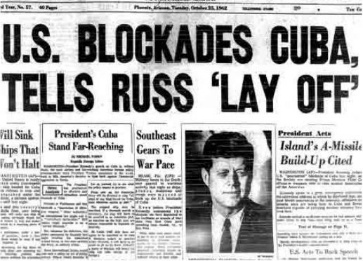
Some nights carved themselves permanently into memory. I still remember the day the Cuban Missile Crisis dominated the front page. The world felt like it was holding its breath. I watched my mother cry as she read the paper at the kitchen table, and that night, my paper bag felt heavier in my hands. When I knocked on your doors, I saw the same tension in your faces. No one knew what tomorrow would bring—but everyone needed to know what was happening today.
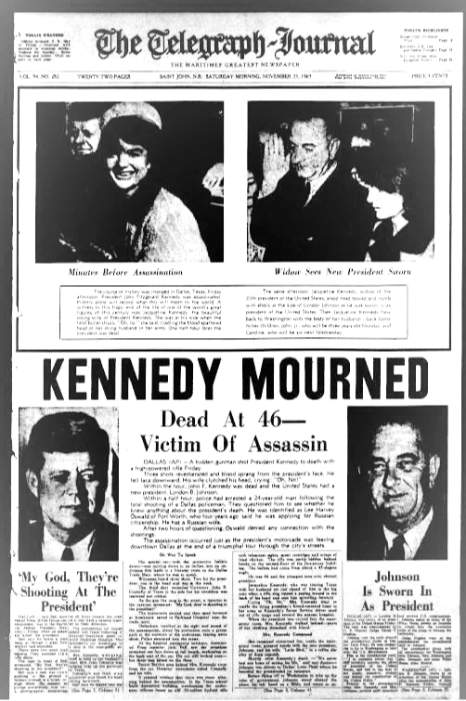
Then there was November 1963. The day President John F. Kennedy was assassinated. I remember it not just for the news itself, but for how you opened your doors that night. Some of you were crying. Others stood silent, staring past me as if the world had tilted off its axis. I didn’t say much. I didn’t need to. The paper said enough.
Even on the hardest days, I showed up. Like the blizzard in January 1964. That evening’s paper included a thick 32-page insert announcing the grand opening of Saint John’s first skyscraper—Brunswick House. The snowbanks were high, the sidewalks barely passable, and my bag felt like it weighed as much as I did. It took me nearly an hour longer than usual, but I delivered every copy. Because I knew you were waiting.
Winter delivery had its own quiet beauty. Darkness settled in before I even picked up my papers at 4:30 p.m. Most porches were unlit—many families were careful about the power bill—but the snow reflected whatever light existed. On nights with a full moon, the entire neighbourhood glowed silver. I found comfort in those still streets, my breath fogging the air as I went door to door, feeling both small and strangely important.
Collecting money was a lesson all its own. Each customer owed thirty-five cents a week. I kept ten cents and paid the rest to the publisher. If someone fell behind, that shortage came directly out of my pocket. My supervisor, Peter Arsenault, often reminded me, “It’s your business.” And it was. I learned quickly that timing mattered. Trust mattered. And how you asked mattered just as much as what you asked for.
Not everyone tipped—but many did. A nickel here. A dime there. Mrs. Martin’s apple turnovers on Wednesdays. And occasionally, someone would hand me a full dollar and say, “Keep the change, kid.” That generosity stayed with me far longer than the coins themselves.
Those years shaped me more than I understood at the time. They taught me discipline, dependability, accountability, and the importance of showing up—even when it was cold, inconvenient, or difficult. They taught me how to serve others quietly and consistently. Lessons I carried into every chapter of my life.
So, if you ever wondered what became of your paperboy, I’m here to tell you this:
I still remember your doors and the smells of your supper plate.
I still remember your faces.
And I still remember the weight of the news in my hands. And even now, all these years later, I still smile whenever I see a front porch glowing softly on a winter evening.
Read. Pause. Listen.If a memory begins to arrive, let the conversation go there.
The Knock at the Door - Where Responsibility Began
If you were around in the early 1960s, you might remember the knock at your door in the evening. A small figure standing there with boots covered in slush and a canvas bag over his shoulder. That was me. Your paperboy.
More Than a Delivery - It Meant Something
I didn’t just deliver newspapers. I delivered the day’s news, the world’s stories and a connection to something bigger. And every night, people were waiting for me to deliver my responsibility. Memory Moment - “Do you remember someone who came to your door regularly?” PAUSE OPTION
Showing Up - No Matter What
I walked every route. Every street. Every door. I didn’t throw papers from a bike. I knocked and waited. Because back then, being there and making the delivery in person mattered
My First Business - Without Calling It That
To others, it was a small job. To me, it was my first business. I learned planning, responsibility, customer service and trust long before I knew those words.
PAUSE OPTION
Learning People - Every Door Was Different
I learned quickly that some doors needed a soft knock, some needed a loud one, some people wanted to talk, some didn’t. And somehow, I learned how to read that in their voice and actions. Memory Moment - “Did you ever learn something about people just by experience?” PAUSE OPTION
The Rhythm of a Home - You Could Feel It
You could tell a lot about a person's home. The smell of supper, the soft or loud sound of their voices and the way the door opened. Each house had its own rhythm, and I became part of it for a few minutes each day.
When the World Felt Heavy - Big Moments, Small Hands
Some nights stayed with me forever. The Cuban Missile Crisis. The day President Kennedy was assassinated. I saw it in people’s faces when they opened the door. Worry. Silence. Fear. I didn’t say much. I didn’t need to.
Gentle Care - “Some may remember difficult world events. Allow reflection without pressure.” PAUSE OPTION(Recommended)
Showing Up Anyway - Even When It Was Hard
There were nights when it would have been easy not to deliver my papers. Blizzards. Cold. Heavy loads. But I went. Because people were waiting. That’s when responsibility becomes real.
Winter Nights - Quiet and Meaningful
Winter deliveries were different. Dark streets. Cold air. Soft light from homes. I felt at times small and alone, yet somehow important. Memory Moment - “What do you remember about winter evenings when you were young?” PAUSE OPTION
Money and Accountability - Lessons That Stay
Every customer owed money. If they didn’t pay, it came out of my pocket. I learned quickly that responsibility has consequences and trust matters
Small Kindnesses - That You Never Forget
Not everyone tipped. But some did. A coin. A pastry. A kind word. And sometimes, “Keep the change, kid.” Those moments stayed with me. Memory Moment - “Do you remember a small kindness that stayed with you?” PAUSE OPTION
What It Built - Without Me Knowing
Those years taught me discipline, dependability, accountability and connection. Not in a classroom but in real life.
What I Still Remember - It Never Really Leaves You
Even now, I remember the doors, the people and the feeling of showing up. And to this day, a softly lit porch still means something to me.
YOUR TURN: The following questions will help you explore your childhood and the community environment that shaped your early view of the world. Below are 6 gentle, memory-unlocking questions, written specifically for seniors, and clearly inspired by the themes, tone, and moments in my Paperboy story. This is the story of when people first realize they are capable. They are designed to feel inviting, not demanding. You can use all of them for your story or select a few.
Core Memory Prompts
Facilitator Note: You do not need to use all prompts. In most sessions, 2–4 prompts are more than enough. If time is limited, or to begin a discussion, start with these:
What is the first responsibility you remember being trusted with?
How did it feel to be trusted with something important for the first time?
Did you have a job or task as a child that you were expected to do regularly?
Was there a moment when you felt proud of something you did on your own?
Did you ever earn your own money as a child? What did you do with it?
Who noticed or encouraged you when you took on responsibility?
STORY FIVE — FIRST RESPONSIBILITIES
Sometimes memories arrive because of something familiar.
Sensory Moment (Optional)
🎵 MUSIC – Link to YouTube
Sixteen Tons -
Working on the Railroad -
There Goes My Baby -
🔊 SOUNDS
Coins clinking
Newspaper rustling
Tools in use
👃 SMELLS
Paper/ink
Metal tools
Outdoor work air
🖼️ VISUALS
Just begin with a photo from your past, pass it around, and let it do the talking.
YOUR MEMORY BOX
Memory Box
A few words are enough. Like the recipe boxes that held family favourites, this is a simple place to keep a thought for later. Your Memory Box stays only in this browser on this device and is not sent anywhere.
Story 6 · Volume 1
Work & Money
“Work Gave Money Meaning”
A Young Man’s First Steps into Door-to-Door Sales “The Knock That Changed Everything”
It was the summer of 1969 in Saint John, New Brunswick, and I was fifteen years old—just stepping into high school, restless, and hungry to do something that mattered. I didn’t yet know what I wanted to be, but I knew I wanted more than standing still. Like most families in our neighbourhood, we lived on one income. There were nine of us under one roof, and money didn’t stretch very far. My mother stayed home, my father worked hard, and every dollar had a job and commitment before it ever arrived.
By then, I had already learned how to earn. At age 8, I began delivering newspapers. For four years, I added grocery deliveries and a few low-paying neighbourhood chores to my route.
Along the way, I volunteered wherever I could—altar boy, rink cleaner, hockey ice flooder, and youth centre cleaner helper. None of these roles came with a title, money or a promise of the future, but each came with responsibility and dependability. They taught me how money feels in my hand, how quickly it can slip away, how effort is tied to outcome, and how the community notices when you show up consistently.
Still, I was looking for something more permanent in the summer. Picking blueberries door-to-door helped, but it lasted only a few weeks. I needed something that didn’t depend on a few weeks in the growing season.
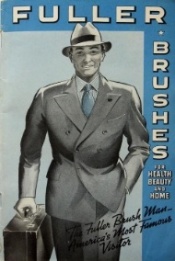
Then, on Sunday, July 20, 1969, at 5:15 p.m., the world watched as Neil Armstrong took one small step onto the surface of the moon. The next evening, Monday, July 21, at exactly 6:05 p.m., I took my own first step into the unknown. I stood on the front porch of a stranger’s home, holding a Fuller Brush sample case and a sales order book, hoping someone would answer the door. Someone did.
I smiled, introduced myself, and delivered my pitch. To my amazement, the woman bought something. What lit me up wasn’t the sale itself; it was the realization that I could connect with a complete stranger. I was nervous, yes, but I felt alive. That night, I set a record for my supervisor. More importantly, I discovered something about myself that would shape the rest of my life: courage.
The 1960s were a golden era for door-to-door sales, from Electrolux and Kirby vacuum cleaners to Watkins Remedies, Avon, Amway, and Tupperware. The front door wasn’t just an entryway—it was an invitation. People answered it. They listened. And once I found my footing in that world of mops, brushes, polish, and concentrated air fresheners, I began to understand that I wasn’t just selling household products. I was learning a craft—one door, one smile, one conversation at a time.
Read. Pause. Listen.If a memory begins to arrive, let the conversation go there.
A Desire to Do Something More –“Standing at the Edge of Something New”
It was the summer of 1969 in Saint John, New Brunswick. I was fifteen years old—just stepping into high school, restless, and ready to do something that mattered. Like many families at the time, we lived on one income. Money didn’t stretch far, and every dollar already had a purpose before it arrived. Memory Moment — “What do you remember about how money was viewed in your home growing up?”
PAUSE OPTION
Learning to Earn - “Before It Had a Name”
By then, I had already started working in small ways. Delivering newspapers. Running errands. Helping wherever I could. It didn’t feel like a “career.” It just felt like growing up. Memory Moment — “What was the first way you earned money or helped out as a child?” PAUSE OPTION
Responsibility Without Recognition–“Showing Up Was the Reward”
Along the way, I volunteered—at the rink, at the youth center, wherever I was needed. There was no pay. No title. No promise of anything ahead. But there was something else: A quiet understanding that showing up mattered. Memory Moment — “Do you remember a time when you helped out and weren’t paid, but it still felt important?” PAUSE OPTION
Looking for Something More - “The Search for Opportunity”
Still, I wanted something more consistent. Picking blueberries brought in a little money, but it didn’t last. I was looking for something steady… something that felt like a step forward. Memory Moment — “Do you remember wanting something more for yourself when you were young?” PAUSE OPTION
The Moment Everything Changed - “One Knock”
On July 21, 1969, I stood on a stranger’s front porch. In my hands was a sample case, an order book and a lot of uncertainty. I knocked, and someone answered.
Memory Moment — “Do you remember a moment when you tried something new or took a chance?” PAUSE OPTION
The First “Yes” - “Confidence Begins Here”
I introduced myself. Delivered my pitch. And to my surprise, she bought something. It wasn’t the sale that changed me. It was the realization that I could connect with someone I didn’t know. Memory Moment — “Do you remember the first time something worked out for you and gave you confidence?” PAUSE OPTION
Learning a Craft - “One Door at a Time”
That night, something shifted. I wasn’t just selling products. I was learning how to approach people, how to listen and how to try again. One door at a time.
Memory Moment — “Did you ever learn something important just by doing it over and over?” PAUSE OPTION
A Different Time - “When Doors Opened”
In those days, people answered their doors. They listened. They gave you a moment. And that moment mattered. Memory Moment — “Do you remember what it was like when people regularly visited or knocked on doors?” PAUSE OPTION
What Work Really Taught Me - “More Than Money”
Looking back, it wasn’t about the money. It was about what work gave me: confidence, courage, persistence, preparedness, and connection. Memory Moment — “What do you think work taught you about yourself?” PAUSE OPTION
The Real Meaning of Work - “What Stayed With Me”
That first knock didn’t just lead to a sale. It led to something bigger: Work isn’t just about earning money… It’s about discovering who you are.
And once you discover that, it stays with you.
YOUR TURN: The following questions will help you explore your childhood and the community environment that shaped your early view of the world. Below are 6 gentle, memory-unlocking questions, written specifically for seniors, and clearly inspired by the themes, tone, and moments in the story of my first summer job. This is the story where people remember not just what they earned but what they learned. They are designed to feel inviting, not demanding. You can use all of them for your story or select a few.
Core Memory Prompts
Facilitator Note: You do not need to use all prompts. In most sessions, 2–4 prompts are more than enough. If time is limited, or to begin a discussion, start with these:
What was your first job or way of earning money?
How old were you when you first started working or helping out?
What did you learn from your first job that stayed with you?
What did earning your own money feel like at the time?
Was there someone who taught you how to work or guided you early on?
What was something you spent your first money on that you still remember?
STORY SIX — WORK & MONEY
Sometimes memories arrive because of something familiar.
Sensory Moment (Optional)
🎵 MUSIC – Link to YouTube
Take This Job and Shove It -
Working Man -
Working Man Blues -
🔊 SOUNDS
Office typing
Machinery
Door knocking
👃 SMELLS
Oil/workshop
Paper/office
Outdoor labour
🖼️ VISUALS
Just begin with a photo from your past, pass it around, and let it do the talking.
YOUR MEMORY BOX
Memory Box
A few words are enough. Like the recipe boxes that held family favourites, this is a simple place to keep a thought for later. Your Memory Box stays only in this browser on this device and is not sent anywhere.
Story 7 · Volume 1
Christmas, Easter, and Birthdays
“Holidays Were How We Marked Time”
A Time for Family, Friends and Memories “Remembering the Celebrations that Brought Us Together”
Some memories from our youth don’t arrive like a photograph. They arrive like a smell, a sound, or a feeling—like the sting of cold winter air in your nose, the smell of turkey in the oven, the rustle of tissue paper around a gift, or the astonishing way a child’s stomach can hold more candy than any medical textbook says is reasonable.
When I think back on my youth in Milford, my strongest memories aren’t just about the holidays themselves—Christmas, Easter, birthdays— but about the rituals that surrounded them. The build-up. The family rhythms. The neighbourhood details. The way a child’s imagination could
turn a simple moment into something sacred.
Christmas Eve: The Fire Hall and “The Bag”
My first clear Christmas Eve memory was in 1958. I was four years old, and my father, like clockwork, brought us to the local fire hall at about six o’clock. That was the hour Christmas officially started. We lined up with all the other kids, bouncing in place like we were powered by invisible springs. Sometimes the snow was blowing sideways. Sometimes it wasn’t. But it didn’t matter. A snowstorm only made it feel more official, as if Christmas had to fight its way into Milford and we were the welcoming committee. And then there he was. Santa.
Not a mall Santa. Not a department-store Santa and not a “we’re pretty sure that’s Mr. So-and-So from down the street” Santa. This was the real Santa. The Milford Santa. The kind you believed in with your whole body, right down to your toes. The excitement was so intense it bordered on medical. The kind where you forget to blink. The kind where, well… let’s just say it was a pee-in-your-pants level of anticipation. And then you received the bag.
Not a sensible little treat bag. A large one—stuffed with candy, an orange, peanuts, and a small chocolate bar—handed to you as if you’d just completed a marathon. We walked out clutching that bag like it was gold, and I remember thinking, That’s it. I have done Christmas correctly. To this day, I don’t understand how we ever fell asleep. Sugarplums weren’t dancing in our heads. Sugar was doing cartwheels in our stomachs.
The Magic of the Ever-Growing Christmas Tree
Christmas at our house was unforgettable because Mom and Dad poured their hearts into it. They preserved the magic well into our early teenage years—trees glowing, gifts piled beneath, relatives visiting, and a feast that filled the house with the smell of roasting meat and sweet desserts.
Dad had his own way of adding magic. A carpenter by trade, he was also an artist. Each December, we drove into the countryside, where he carefully selected two trees. Back home, he drilled holes into the fuller one and inserted branches from the other, shaping a perfectly thick Christmas tree. That old drill and his steady hand could have belonged in the Smithsonian.
Then there were the lights. Dad strung colourful bulbs along the outside of the house, climbing icy ladders in bitter cold. They stayed up until spring, by which time the paint had faded and peeled, leaving a Victorian sparkle of clear glass. I thought they looked even better that way. Maybe my dad invented the Victorian lighting trend without knowing it?
A Hallmark Christmas Before the Hallmark Channel
Since I was four, Christmas felt like something my parents built. The living room itself seemed excited to see us for the holidays, as it was off-limits to us kids throughout the year except for these three weeks. Christmas morning was the main event. With four younger kids still at home, we hit the stairs like a jailbreak at five in the morning—pure chaos, laughter, squealing, and collisions, but never anger.
What I don’t remember is my older brother's joining that stampede. Doug, Peter, and Paul were much older—eight to eighteen years ahead of us. By the time I was deep into my Santa years, they were deep into their girlfriend years. They arrived for Christmas dinner, not dawn patrol.
In a way, we were two families under one roof. Mom and Dad seemed to enjoy having a second round of little kids to experience Christmas with all over again. Years later, when I became a father myself, I felt that contrast in a different way. Kelci, our only child, came down on Christmas morning sweet and polite—but without the chaos that multiplies excitement. No sibling competition. No stampede. Just… quieter. We hoped for more children. We tried and lost Gabrielle in 1996. Life had other plans.
Looking back now, I see how fragile and precious those Milford Christmases were—how much depended on timing, luck, and the effort of parents creating magic in a modest home.
Easter: Candy, Church, and Spring
Easter moved around, never quite settling on a definitive date on the calendar. March Easters were cold and stubborn, yet an April Easter felt like freedom: for Catholics, the end of Lent meant candy without guilt, church clothes could finally be lighter, and winter boots could be replaced by shoes.
I remember an Easter cowboy hat filled with candy. I don’t know who decided candy belonged in a cowboy hat, but I respect their marketing skills.
Spring also revealed winter’s hidden surprises—what I lovingly call “Barker Eggs.” Those were the gifts your neighbour's dogs deposited on your lawn all winter for you to clean up in spring. Still, Easter shifted my outlook for renewal. Even as a kid, I learned— without realizing it—to let winter negativity melt away with the snow.
Birthdays: Small Moments, Big Meaning
I remember a special birthday when I was six or seven. Dad stopped at the Fairville Mercantile and bought me a book. Not flashy. But it mattered because he bought it. A working man’s quiet love. Years later, I realized how rare and meaningful that moment was.
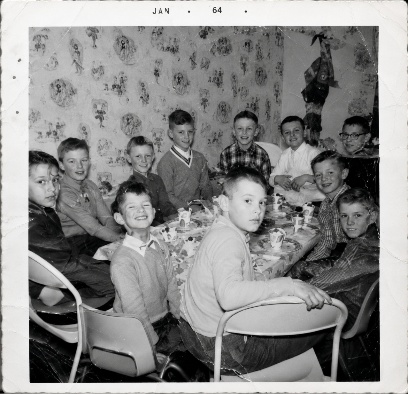
There were bowling birthday parties, cake, and the thrill of feeling grown-up. Photos were precious—twenty-four shots per roll, developed months later. When they came back, it was like reopening a memory.
One birthday stands out most. I was promised a new bike in June if I did well in school. Motivation disguised as generosity. When Dad brought home the bike—a gold Leader with streamers—it wasn’t the dream bike I’d imagined. I felt disappointment, then understanding. He had spent more on that gift than on any before. That’s the moment I wish I could revisit—not to change the bike, but my reaction. Love doesn’t always arrive in the shape you picture. Sometimes it arrives in gold paint and streamers, carried through the door by a tired father who wants to make you happy.
The Real Gift
When I look back on Christmas, Easter, and birthdays in Milford, I don’t see candy and gifts. I see effort. I see parents building tradition. I see a community giving a child permission to believe in magic. Those days weren’t special because we had more. They were special because we had each other. You can wipe your tears anytime. I just did.
Read. Pause. Listen.If a memory begins to arrive, let the conversation go there.
How Memories Arrive - “Not Always as Pictures”
Some memories, especially the special occasion ones from our youth, don’t arrive like a photograph. They arrive like a smell… a sound…a feeling. Cold winter air in your nose. The smell of a turkey cooking. The sound of wrapping paper. Memory Moment — “What smells or sounds bring back holiday memories for you?”
PAUSE OPTION
More Than the Holiday - “It Was the Build-Up”
When I think back on my youth in Milford, I don’t just remember the holidays themselves. I remember the anticipation, the family routines and the feeling that something special was coming. Memory Moment — “What did you look forward to most during holidays when you were young?” PAUSE OPTION
Christmas Eve - “When It All Began”
My first clear Christmas Eve memory was in 1958. I was four years old.
My father would take us to the local fire hall at six o’clock for a bag of candy from Santa. That’s when Christmas officially started. Memory Moment — “Do you remember where your Christmas celebrations usually began?” PAUSE OPTION
Waiting for Santa - “The Kind You Truly Believed In”
We lined up with other children, full of energy and excitement and then… Santa arrived. Not a store Santa. Not a mall Santa. The real one—at least to us.
Memory Moment — “What do you remember believing about Santa or holiday traditions as a child?” PAUSE OPTION
The Bag - “A Simple Gift That Felt Like Everything”
Then came the bag. Candy. An orange. Peanuts. A chocolate bar. We held onto it like treasure. It wasn’t just what was inside; it was how it felt.
Memory Moment — “Do you remember a simple gift that meant a lot to you?”
PAUSE OPTION
The Night Before - “Trying to Fall Asleep”
That night, sleep didn’t come easily. Excitement took over. The kind where your mind keeps going even when your body is tired. Memory Moment — “Do you remember trying to fall asleep on a special night as a child?” PAUSE OPTION
The Christmas Tree - “Made by Hand”
My father had a way of making Christmas special. He would take two trees and combine them into one perfect tree. It wasn’t store-bought perfection.
It was handmade. Memory Moment — “Did your family have any special ways of preparing for the holidays?” PAUSE OPTION
The Lights - “Seen From Down the Street”
He would string lights outside the house in the cold. Those lights stayed up long after Christmas passed. And somehow, they still felt magical even when they were off.
PAUSE OPTION
Christmas Morning - “Pure Joy”
Christmas morning was chaos. Kids running down the stairs. Laughter. Excitement. Not perfect… but full of joy. Memory Moment — “What do you remember most about Christmas morning in your home?” PAUSE OPTION
Two Families Under One Roof - “Different Stages of Life”
My older brothers were at different stages of life, with an 18-year difference between the oldest and the youngest. They joined later in the day. In a way, we were two families under one roof, and my parents got to experience Christmas twice. Memory Moment — “Did your family celebrations change as you got older?”
PAUSE OPTION
More Than Christmas - “All the Celebrations That Marked Time”
It wasn’t just Christmas. It was Easter. Birthdays. Family gatherings. These were the moments that marked time in our lives. Memory Moment — “Which celebrations or traditions stand out most from your youth?” PAUSE OPTION
Easter - “A Different Kind of Celebration”
Easter felt different from Christmas. Quieter. Softer. But still meaningful. There were traditions: church services, special meals, chocolate, and small treats. And a feeling that something was being marked even if, as children, we didn’t fully understand it.
Memory Moment — “What do you remember about Easter or springtime celebrations when you were young?” PAUSE OPTION
Birthdays - “A Day That Was Yours”
Birthdays were simpler then. No big productions. No elaborate planning. But they mattered. A cake. A few gifts. Family gathered. And for one day it was your day.
Memory Moment — “What do you remember about your birthdays as a child?”
PAUSE OPTION
Growing Older - “How Celebrations Changed”
As we grew older, celebrations changed. Less about excitement and more about connection. People came and went. Traditions shifted. But something remained: The importance of being together. Memory Moment — “How did celebrations change for you as you got older?” PAUSE OPTION
What It All Meant - “Why It Stayed With Me”
Looking back, it wasn’t about the gifts. It was about being together, feeling included and knowing you belonged
The Feeling That Remains - “Still With Me Today”
Even now, those memories feel close because holidays were never just dates. They were moments that brought people together. And that feeling… never really leaves you.
YOUR TURN: The following questions will help you explore your childhood and the community environment that shaped your early view of the world. Below are 6 gentle, memory-unlocking questions, written specifically for seniors and clearly inspired by the themes, tone, and moments in my story of Christmases, Easters, and Birthdays past. This is the story where people don’t have to search for memories; they arrive on their own. They are designed to feel inviting, not demanding. You can use all of them for your story or select a few.
Core Memory Prompts
Facilitator Note: You do not need to use all prompts. In most sessions, 2–4 prompts are more than enough. If time is limited, or to begin a discussion, start with these:
What do you remember most about Christmas as a child?
What smells or sounds bring back your holiday memories?
What was something simple you received that meant a lot to you?
What do you remember about your birthdays as a child?
Were there traditions your family followed during holidays or celebrations?
What made those celebrations feel special to you?
STORY SEVEN — HOLIDAYS & CELEBRATIONS
Sometimes memories arrive because of something familiar.
Sensory Moment (Optional)
🎵 MUSIC
White Christmas -
Silent Night -
Here Comes Peter Cottontail -
The Unicorn -
🔊 SOUNDS
Wrapping paper, Family laughter, Holiday music
👃 SMELLS
Turkey dinner
Baking cookies
Pine tree
🖼️ VISUALSJust begin with a photo from your past, pass it around, and let it do the talking.
YOUR MEMORY BOX
Memory Box
A few words are enough. Like the recipe boxes that held family favourites, this is a simple place to keep a thought for later. Your Memory Box stays only in this browser on this device and is not sent anywhere.
Story 8 · Volume 1
Hard Moments, Lessons Learned
“Hard Moments Taught Me the Most”
Making a Commitment and Losing Focus “Commitments Aren’t Measured by Our Intentions in Our Youth, But by Our Follow-Through.”
This story recounts the life lessons and values I learned in my youth while serving daily to check on seniors living alone. I placed it here because it is tied to my paper-delivery business in 1961 and to my sincere desire for everyone to pay more attention to our senior neighbours and friends more often and on a schedule.
We could reduce the fear many home-alone seniors face today. Yet this story is more about my failure to take responsibility for my commitment to help a senior when I was young. Separating something you want to do from what you should do is challenging for a kid, and this is a good example. This is a story that is hard for me to write.
It begins when one of my newspaper customers in the early 60s, Tommy, lived alone in his large family home, which had been passed down over the years. In his mid-seventies, Tommy was frail, lived alone, and his back, bent by osteoarthritis, was making it hard for him to manage household duties.
When I began my paper route, he asked, and I often helped with small chores, fetching water from the well, carrying firewood for his stove, or running errands, and I’d stay to chat with him for a while when I delivered his paper. He tipped me well. I was the only person he connected with daily, as the mailman simply slid letters through his slot without knowing if Tommy was okay. Tommy didn’t have a telephone. My knock on the door was his one sure sign of connection each day.
After over two years of my six-day delivery of the paper, one evening Tommy didn’t come to the door. I knocked harder, then, in concern, I cupped my hands to his bedroom window. His bed was unmade. My stomach tightened when I spotted him lying on the floor. “Tommy!” I shouted through the glass, panic in my voice. Without wasting a second, I ran to the neighbour’s house, pounding on the door. “Something’s wrong with Tommy! Call an ambulance!” It turned out he had suffered a stroke. Thankfully, he survived and returned home a few weeks later. From then on, I made sure my daily paper delivery also served as a wellness check.
In Boston, his brother Jim was relieved and grateful, and he sent me a few dollars in thanks. When Jim visited the next summer, he asked if I would help paint a room and stack firewood. I agreed, and we enjoyed spending time together each day for a couple of weeks, cutting wood for the winter and painting a room for Tommy.
But the next year, when Jim came from Boston in the summer, a distraction came my way. My friend’s father was building a house nearby, and I was invited to help. It felt exciting to be part of something big. I carried wood, pounded nails, laid shingles and showed up every day like I was on a punch clock. I was fueled by the thrill of working on a real construction site.
“Hey, you’re doing good, Tony,” my friend’s father would say, handing me a soda. That encouragement kept me coming back at 7 AM each morning and staying till 5 PM. I didn’t know my friend was being paid. I wasn’t. I had volunteered without realizing it, and my pride masked my disappointment. The worst part was that while I worked there, I neglected my commitment to Tommy and Jim. I dropped by their home for only short visits of an hour or so, and eventually, Jim stopped speaking to me altogether. The sting of their disappointment cut deep. At 12 years old, I had learned the cost of making a commitment and letting someone down.
To Review
This memory of making a commitment to someone and failing to do so has stayed with me throughout my life, and I continue to write about it today as one of my greatest personal disappointments. It taught me thatpromises, even at a young age, are sacred, no matter how small. A dependable person has incredible power, the power to earn respect and trust. I didn’t fully grasp that truth at the time, but I never forgot it. From that moment forward, I vowed to follow through on my commitments, no matter what distractions came along.
Read. Pause. Listen.If a memory begins to arrive, let the conversation go there.
Not Every Memory Is Easy - “And That’s Okay”
Not all memories from our youth are joyful. Some are difficult. Some are confusing. Some are moments we didn’t understand at the time. And yet…
They are often the ones that shape us the most.
The Moments We Carry - “Even When We Don’t Speak of Them”
There are things we experienced growing up that we didn’t talk about. Not because they didn’t matter but because we didn’t yet have the words. And sometimes… we still don’t. PAUSE OPTION
Learning Through Difficulty - “Without Realizing It”
Hard moments have a way of teaching quietly. They are the moments we all want for our kids, so they will be taught strength, patience and understanding. Not all at once, but over time.
When Life Felt Unfair - “Moments That Stayed With Us”
There may have been times when something didn’t feel right. Something that felt unfair… or confusing… or difficult to carry. Memory Moment — “Do you remember a time that was difficult, but taught you something important?”
Gentle Care. “This question is optional. Participants may choose to reflect silently or pass.” - Pause Here (Recommended)
The People Who Helped Us Through - “We Were Not Alone”
Even in difficult times, there were often people who helped. A parent. A friend. A neighbour. A teacher. Sometimes they didn’t solve the problem, but they made it easier to carry. Memory Moment — “Was there someone who helped you through a difficult time?” PAUSE OPTION
Strength You Didn’t See Then- “But Can See Now”
When we’re young, we don’t always recognize our own strength. We just keep going. But looking back, you may realize that you were stronger than you thought.
PAUSE OPTION
What We Learned - “Even If It Took Years”
Some lessons don’t show up right away. They take time. Sometimes years. But eventually, they become part of who we are. Memory Moment — “What is something life taught you that you still carry today?” PAUSE OPTION
Choosing What to Remember - “You Are in Control”
Not every memory needs to be shared. Not every door needs to be opened. You are in control of what you choose to remember… and what you choose to keep private.
Gentle Care - “Participants are always free to listen without sharing.” PAUSE OPTION
The Meaning Behind It All - “How It Shaped You”
Looking back, the difficult moments were not the whole story. But they were part of it, and they helped shape your strength, your perspective, and your resilience
What Remains - “A Quiet Strength”
What remains is not the hardship itself…but what grew from it. A quiet strength. A deeper understanding. A sense of who you are.
YOUR TURN: The following questions will help you explore your childhood and the community environment that shaped your early view of the world. Below are 4 gentle, memory-unlocking questions, written specifically for seniors, and clearly inspired by the themes, tone, and moments in my story of making commitments to others in our youth. They are designed to feel inviting, not demanding. This story is about reflection, not disclosure. Participants may choose to share, reflect quietly, or simply listen. All responses—including silence—are welcome. You can use all of them for your story or select a few.
Core Memory Prompts
Facilitator Note: You do not need to use all prompts. In most sessions, 2–4 prompts are more than enough. If time is limited, or to begin a discussion, start with these:
Can you think of a time in your life that was challenging, but helped you grow in some way?
Was there someone who helped you through a difficult time?
What is something life has taught you that you still carry with you today?
(Optional Core — use carefully)What helped you stay strong during difficult times?
STORY EIGHT — HARD MOMENTS & LESSONS
Sometimes memories arrive because of something familiar. Sensory Moment (Optional — Use Lightly)
🎵 MUSIC – Link to YouTube
What a Wonderful World -
The Times Are a-Changing -
🔊 SOUNDS
Soft instrumental music
Quiet nature sounds
👃 SMELLS
Fresh air
Clean linen
🖼️ VISUALS
Just begin with a photo from your past, pass it around, and let it do the talking.
YOUR MEMORY BOX
Memory Box
A few words are enough. Like the recipe boxes that held family favourites, this is a simple place to keep a thought for later. Your Memory Box stays only in this browser on this device and is not sent anywhere.
From Photo… to Memory… to Story
A Gentle Memory Companion Idea:
Using Photos of Your Past to Assist in Memory Recall
Start Here
You don’t need to remember everything. You don’t need the right words. You don’t need a perfect story. Just begin with one photo… and let it do the talking.
Step 1 — Choose a Photo
Pick any photo that means something to you. There’s no such thing as the “right” photo. It could be:
A family moment
A place you loved
A celebration or holiday
A quiet, ordinary day
Step 2 — Sit With It
Before trying to explain anything… just look. Let the photo bring something back. Take your time. Ask yourself gently:
What do I notice first?
Who is with me?
Where am I?
What feels familiar?
Step 3 — Let the Memory Arrive
You don’t need to “search” for memories. Even a few words is enough. Let them come to you. You might begin with:
“This reminds me of…”
“I remember…”
“Back then…”
Step 4 — Use a Few Gentle Prompts (If You Need Them)
If the memory feels stuck, try one or two of these. You don’t need to answer them all. One is often enough.
What was happening just before or after this photo?
What sounds or smells do I remember?
What kind of day was it?
Who mattered most in this moment?
What did this time in my life feel like?
Step 5 — Say It, Write It, or Share It
There’s no one right way to capture your memory. Every memory counts. You can:
Say it out loud
Write a few lines
Share it with someone
Or simply sit with it
A Gentle Reminder
This is not about getting it right. It’s about feeling something real. Sometimes one small memory opens the door to many others.
A Final Reflection
Our lives are made up of moments we often didn’t recognize at the time. A neighbour waving from a porch. A job that paid a dollar. A winter storm; you somehow made it through. A simple knock on a door that led to something more. At the time, they felt ordinary. Looking back, we begin to see they were anything but. The small things were never small. They were the moments that shaped us. The quiet turning points that led us forward—sometimes without us even knowing it.
This experience is not just about remembering the past. It is about reconnecting with who you were, what you felt and the people and places that helped shape your life. And perhaps something more: a reminder that what carried you through those years—your courage, your humour, your kindness, your heart- is still there. It may be quieter now. It may move at a different pace. But it is still there.
As we grow older, memories don’t disappear. They return in their own way. A feeling. A moment. A familiar sense of something once known. One Memory at a Time was created to honour that. This is not a book about remembering everything. It is not a test. Not a timeline. Not something to complete. It is an invitation. To pause. To reflect. To reconnect with the moments that shaped your life — one memory at a time. Each story is designed to feel familiar. Not to ask for answers but to gently bring something back. A place. A voice. A moment you thought was long gone. There is no right place to begin. No expectation to finish. One memory is enough.
This memory experience workbook was created for individuals, families, community groups and care and retirement settings. It respects pace, welcomes silence and values feeling over perfect recall. Because memory is not about getting it right. It is about: Connection, Dignity, Being heard and Being remembered
And most importantly, a life is not remembered all at once; it is remembered one memory at a time.
Thank you for taking part in this experience. Whether you shared your stories, spoke a few words, or simply listened, it all matters. Because your memories matter. Your stories matter, and the life you’ve lived—one moment at a time is worth remembering. Sometimes the smallest memories are the ones that stay with us the longest. And if this journey brought something back for you, there are more stories still to come. I am already writing it for release later this year – “Planes, Trains and Automobiles - the journeys that shaped our lives”.
More stories still to come.
Volume 2: Planes, Trains & Automobiles — the journeys that shaped our lives.
About the Author
Tony Hebert is a community volunteer, business entrepreneur, author of three books, and social entrepreneur whose lifelong commitment to community service spans more than six decades. Beginning with early acts of volunteerism at age 7 as an altar boy in his church, he went on to play leadership roles in major fundraising and community initiatives, helping raise millions of dollars for organizations such as United Way, the YMCA, the Boys and Girls Club, the Seniors Information Center and numerous other community non-profits and seniors’ programs. For more than thirty years, he owned and was on the advisory board of a Level III senior care home, eventually becoming its majority shareholder before its sale.
Tony has served on multiple boards, led large-scale capital campaigns, and created and financed innovative platforms to strengthen community engagement. He is the founder, financier, and innovator of social entrepreneurial initiatives, including the Hands Up! Volunteer Expo, BesideMyDesk, MyCommunityCalendar.ca, and YouthLink.ca. All were designed and invested in to connect people, especially our youth and seniors, with meaningful opportunities to participate and contribute.
Today, he is the creator of One Memory at a Time, a free, national volunteer-driven initiative gaining national attention for helping seniors recall, write, share, and preserve their life experiences. Through his writing, mentorship, and ongoing philanthropic work, Tony continues to inspire others with his belief that even the smallest memory—or act of service—can create lasting impact.
THE OMAAT LIBRARY
A Library of Stories, Guidance and Possibilities
Choose a shelf. Tap any book to open it. The Library now includes program resources, training, sharing materials and media coverage.
Each resource opens in its own viewer. The core OMAAT app works offline after its first successful load. Use Make OMAAT Available Offline on the Home screen to save essential Library resources too. Larger books will also remain available offline after you have opened them once while connected.
MEMORY GAME
Try a Memory Moment
Reminiscent of the flash cards many of us knew in school — only gentler, and made for memories.
This is not a memory test. There is no score, no timer and nothing you have to remember.
Choose a theme
Read slowly. Pause. If a memory begins to arrive, follow it.
Instead of beginning with a list of questions, OMAAT begins with familiar Guided Stories, Memory Moments and gentle prompts. A story about school, a first job, a family tradition or an ordinary childhood moment can become the doorway to something a person has not thought about in years.
There is no memory test, no required order, no schedule and no finish line. You can use it alone, beside someone you care about, in a seniors’ residence, school, church or community group. The storyteller always remains in control.
Read. Pause. Listen. Follow. When the memory arrives, the screen has done its job.
It works on a phone, tablet or computer and the core app can be made available offline for places where internet or cellular service is limited.
Learn more and access OMAAT: www.onememoryatatime.org
The approach is intentionally gentle. Rather than asking someone to remember on demand, OMAAT begins with a short story filled with familiar people, places, sounds, objects and experiences. Those details can act as memory seeds. If something connects, the reader pauses and gives the storyteller time to follow the memory wherever it wants to go.
The program can be used by an older adult at home, a family member visiting a parent, a Memory Companion, a retirement or nursing home, a home-care organization, church or community group, or a student participating in an intergenerational storytelling project.
The app includes Volume 1 — Our Youth, Memory Moments, training resources and a growing digital Library. There is no cost, no subscription and no pressure to complete anything. The core experience can also be saved for offline use, helping make it practical in homes, classrooms and rural communities without reliable internet access.
Read. Pause. Listen. Follow.
Learn more and access the free program at www.onememoryatatime.org.
One memory can change a conversation. One conversation can change a relationship.
The publications, guides, presentations, workbooks, forms, graphics, and other original materials associated with these programs are also protected by copyright.
Reasonable adaptations may be made to address curriculum, accessibility, language, cultural, and local program needs, provided that the purpose and guiding principles of the methodology are preserved, attribution and copyright notices remain visible, and the materials are not sold, commercially licensed, rebranded, or represented as an independently created program.
Commercial use, republication, substantial modification, incorporation into another program, or removal of the One Memory at a Time programming and book identity requires prior written permission from the author.
For permission requests, contact Tony Hebert at tony@tonyhebert.com.